
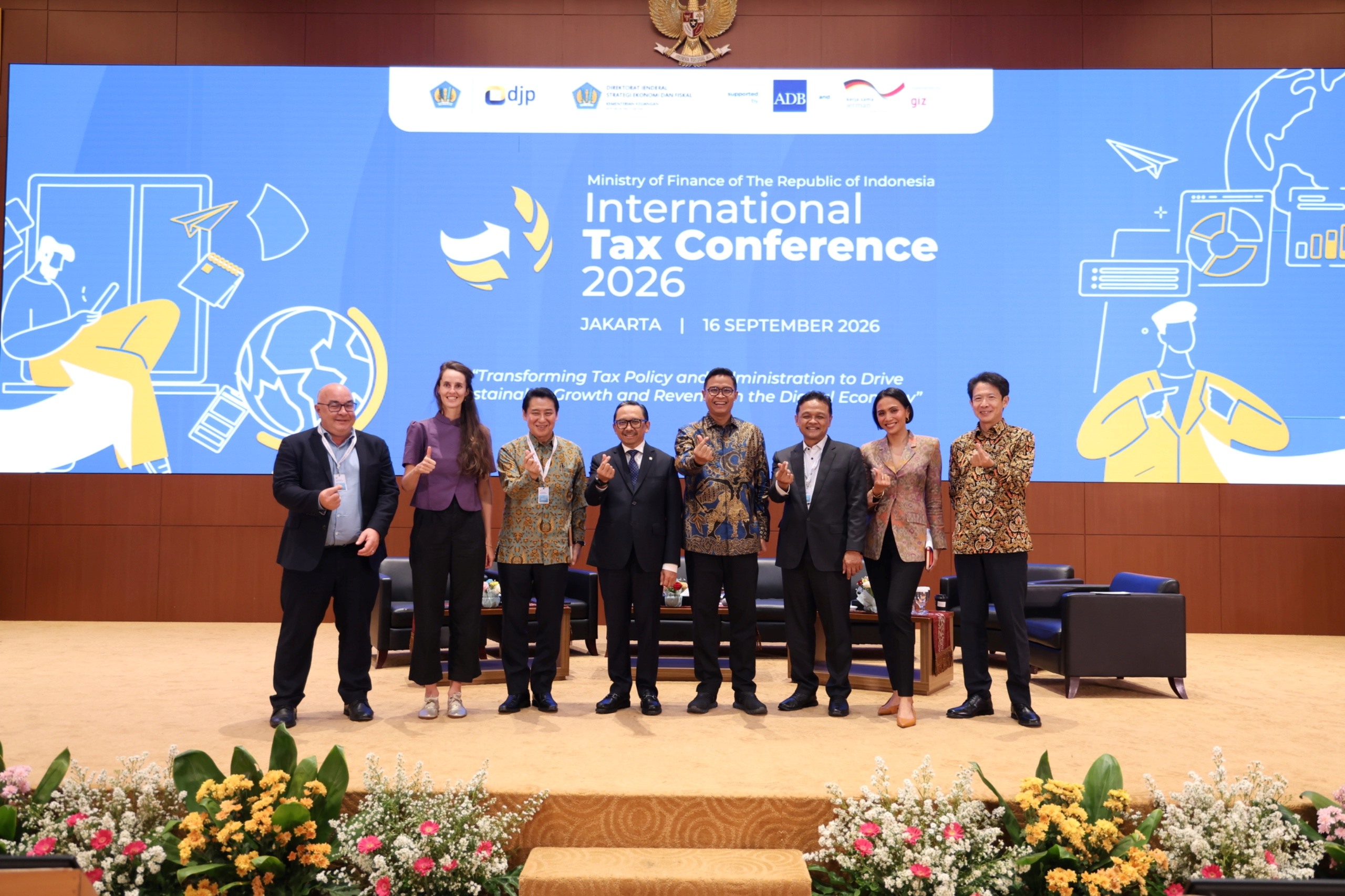
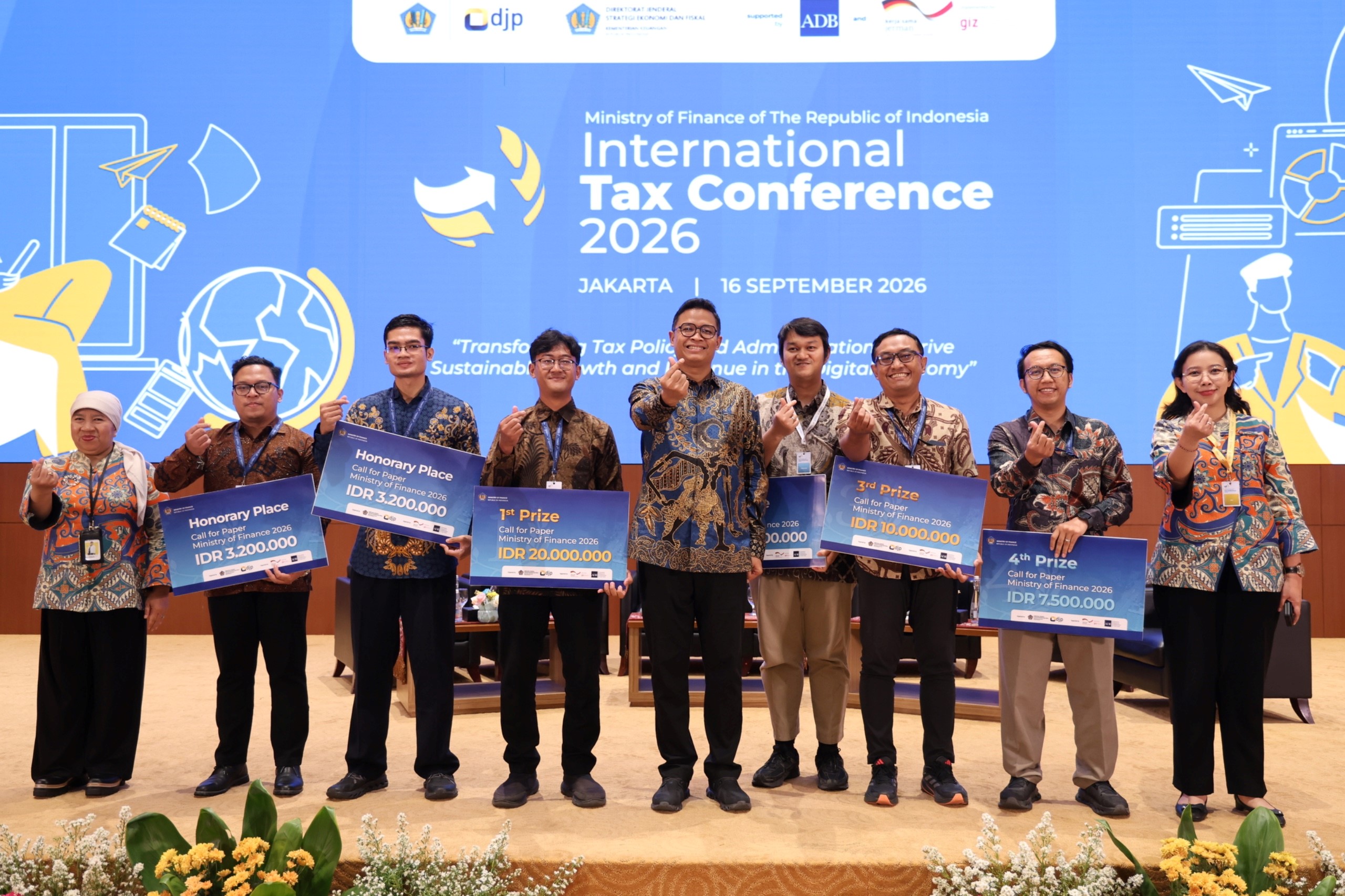
The Directorate General of Taxes (DGT) in collaboration with The Directorate General of Economic and Fiscal Strategy (DGEFS) held the International Tax Conference (ITC) 2026 at Auditorium Cakti Buddhi Bhakti in the Headquarter of the DGT (Wednesday, 16/9/26). It was the concluding event of the Ministry of Finance Call for Papers 2026. For the DGT, it was the fifth call for paper as the biennial event since 2018.
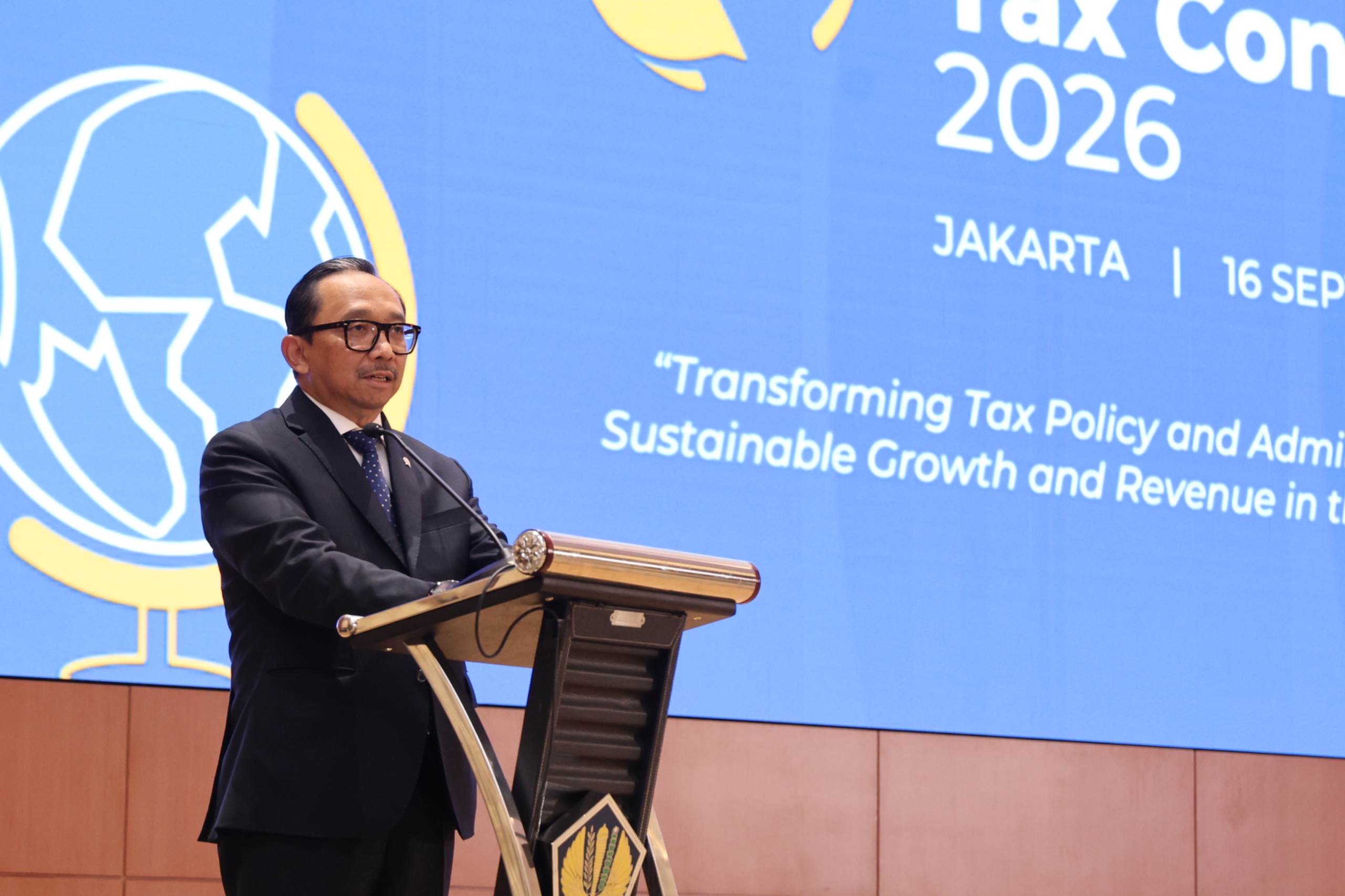
The Vice Minister of Finance, Juda Agung, stated that this event was intended to bring together researchers, policy analysts, and tax administrators to synchronize researches and evidences with practical policy challenges. It was a dialogue that could give better understanding not only on what policy achieved, but also on how, for whom, and under what condition it worked.
“This not only strengthen the effectiveness of tax reform, but also reinforce institutional credibility and public trust,” told Juda.
It was aimed to produce rigorous and impartial research that could enrich the understanding of the policy design to improve the existing policy. Inge Diana Rismawanti, the Director of Tax Dissemination, Services, and Public Relations, elaborated that it provided a stage for researches to present their ideas on the current fiscal and taxation issues that can contribute to future policy discussions.
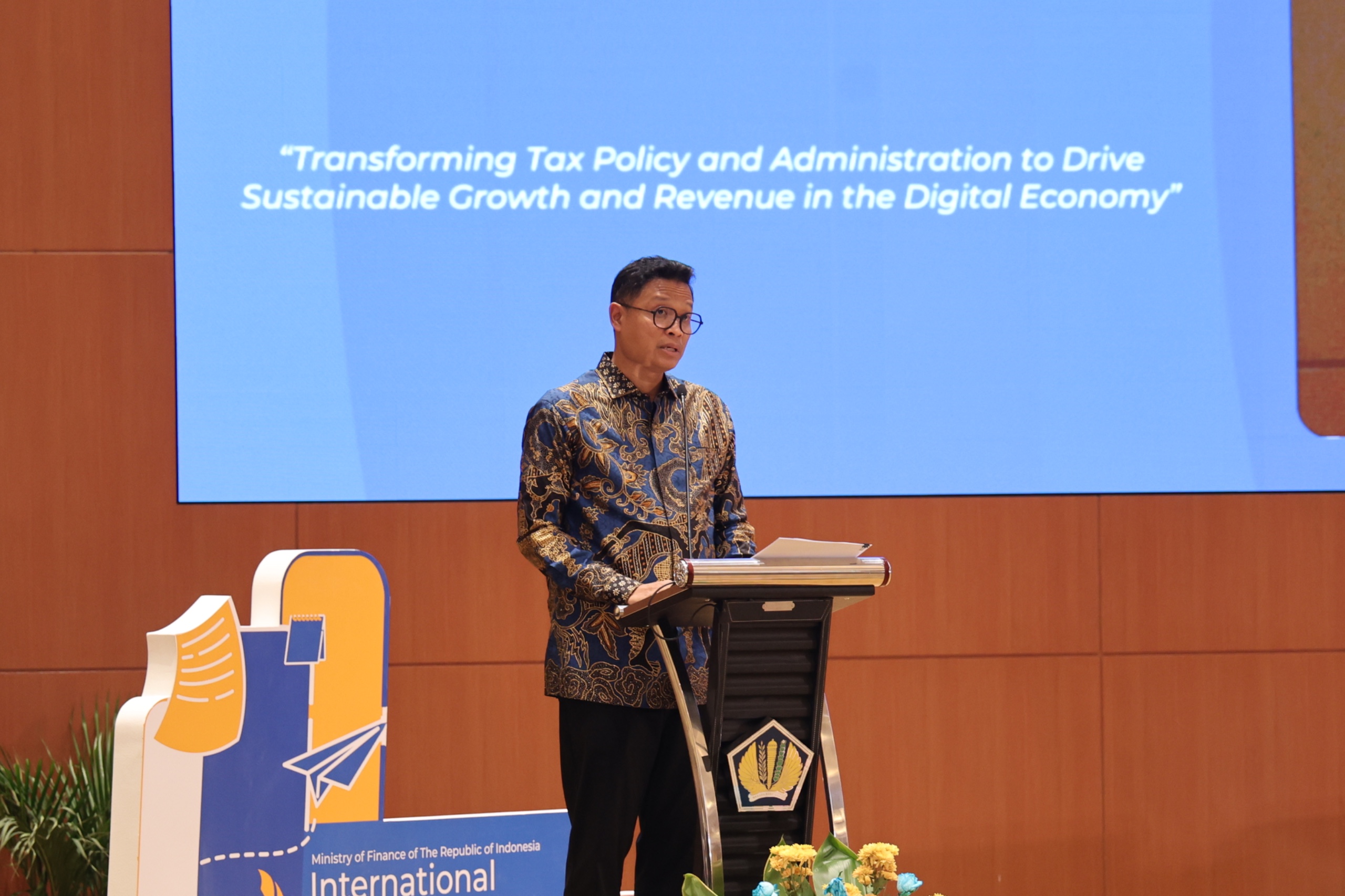
The Director General of Taxes, Bimo Wijayanto, also attended this event. Despite the complexity of tax policy, the scientific study could help in mapping the problems and offering several policy recommendations.
“Tax policy is often complex, and no single paper can change it overnight. However, high-quality research can help us ask better questions, gain clearer insights into problems, and explore more effective policy options,” said Bimo.
The Director of Taxation Strategy, the DGEFS, Pande Putu Oka Kusumawardani, emphasized that Indonesia’s economy was changing along with the ways businesses operated, people earned and consumed, and transactions took place. In response to this circumstance, tax system also has to evolve, not only in the matter of technology and regulation, but also the policy design.
“… transformation is not simply about new technology or new regulations. It is about changing how we understand problems, make decisions, and design policies,” explained Oka.
The theme of this event was “Transforming Tax Policy and Administration to Drive Sustainable Growth and Revenue in the Digital Economy”. There were 10 subthemes, including revenue optimization, tax incentives, trade policy, tax gap, shadow economy, as well as emerging issues in digital taxation, data-driven tax administration, and tax enforcement.
The committee opened the submission of the papers since April 27 until July 17, 2026 and received 423 papers from authors within the Ministry of Finance and from the public. The authors from the six-finalist papers were invited to present their projects at the ITC 2026 in front of five judges.
The judges consisted of the Assistant to the Minister of Finance on State Revenue, Dwi Teguh Wibowo, the Assistant to the Minister of Finance on Tax Compliance, Yon Arsal, the Fiscal Research and Advisory from DDTC, Bawono Aji, the lecturer from the Faculty of Administration Science of the University of Indonesia, Milla Sepliana, and the lecturer from the Faculty of Economics and Business of Padjajaran University.
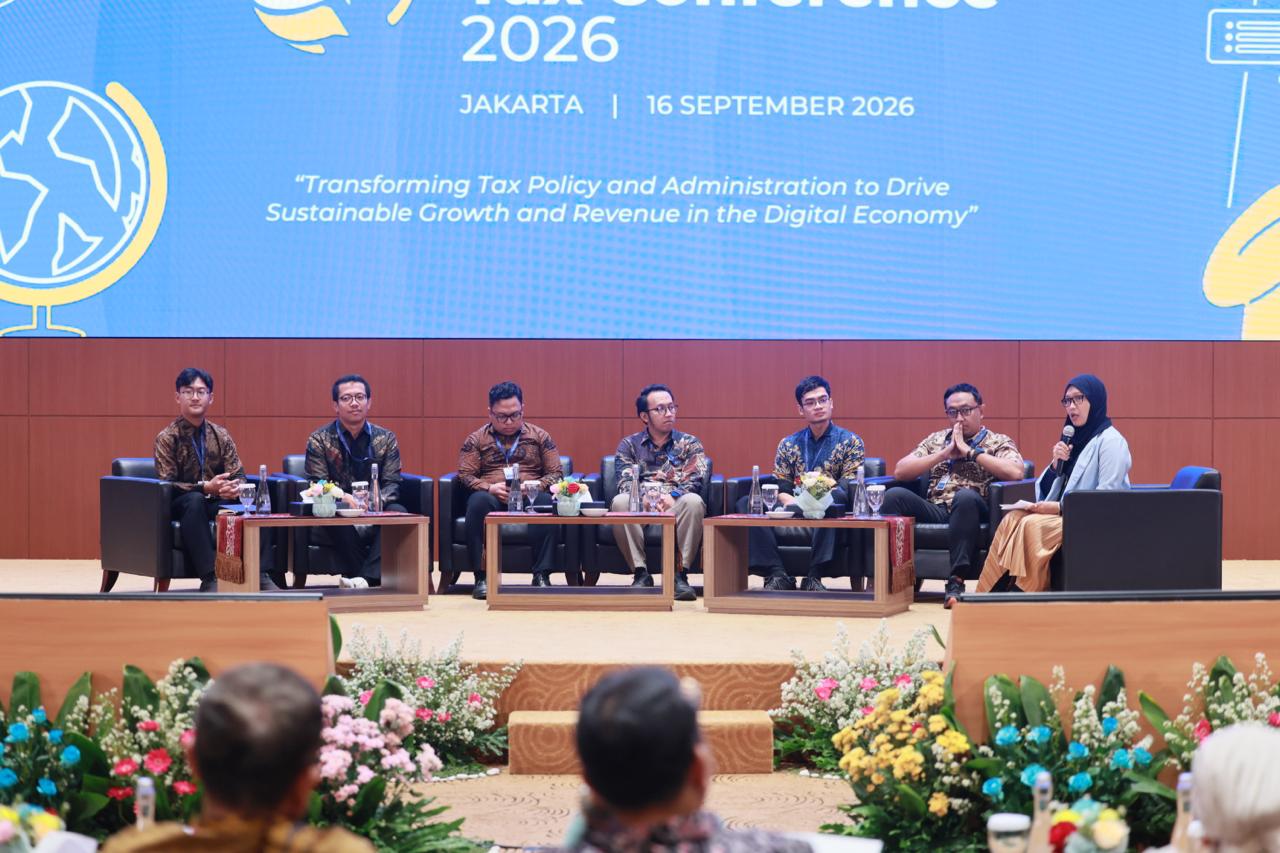
The Ministry of Finance also invited six panelists for a panel discussion in this event. Yon Arsal (Assitant to the Minister of Finance for Tax Compliance Affairs), Hannelore Niesten (Fiscal Policy and International Development Special Consulting, Asian Development Bank), Rimawan Pradiptyo (senior lecturer at Faculty of Economics and Business, Universitas Gadjah Mada), Kosugi Naofumi (Senior Advisor, Public Finance Management/Tax Administration Governance and Peacebuilding Department, Japan International Cooperation Agency), Allan Partington (Revenue Performance Tax Gap Director, Australian Taxation Office), and Nishino Takeru (Indonesia Japan Tax Society) presented as the panelists.
The discussion was moderated by Andini Wening Tyas Effendi, a journalist documentarian strategic communication expert. The topics varied from tax incentives, gender responsive tax policy and administration, transformation of informal sector to formal sector, data-driven tax administration, tax gap, and cross-border taxation.
The winners of the Ministry of Finance Call for Paper 2026 were announced at the end of this event, as follows:
- the 1st winner: Tasdik Mahandito;
- the 2nd winner: Suryo Adi Rakhmawan;
- the 3rd winner: Agung Endika Satyadini, Ade Darma putra, Restu Rea Erlangga, and Brigitta Steffi VDKG;
- the 4th winner: Muhammad Azhar Nurzaman
- honorary place: Rayson Virtuosi;
- honorary place: Icha Wahyu K., Arya Candra K., and Yuninda Anggraini P.
In his closing remarks on behalf of the DGT and the DGEFS, Bimo expressed his sincere appreciation for the participation and the contribution of all parties involved for the better policy design.
“Let us continue to connect research with policy making, and working together to build tax system that support sustainable development and deliver tangible benefits to all Indonesia,” closed Bimo.
This event was positively welcomed by the participants.
“The topic is so relatable to the current issue,” expressed Nasyilla, separately confirmed.
“It is my first time to become the participant and I think it’s so valuable since it gives me insight in the matter of economy and fiscal,” added Devi, separately confirmed.
| Reporter: Destiny Wulandari |
| Photographer: Documentation Team |
| Editor: Yacob Yahya |
*)Konten yang terdapat pada halaman ini dapat disalin dan digunakan kembali untuk keperluan nonkomersial. Namun, kami berharap pengguna untuk mencantumkan sumber dari konten yang digunakan dengan cara menautkan kembali ke halaman asli. Semoga membantu.
- 52 kali dilihat