
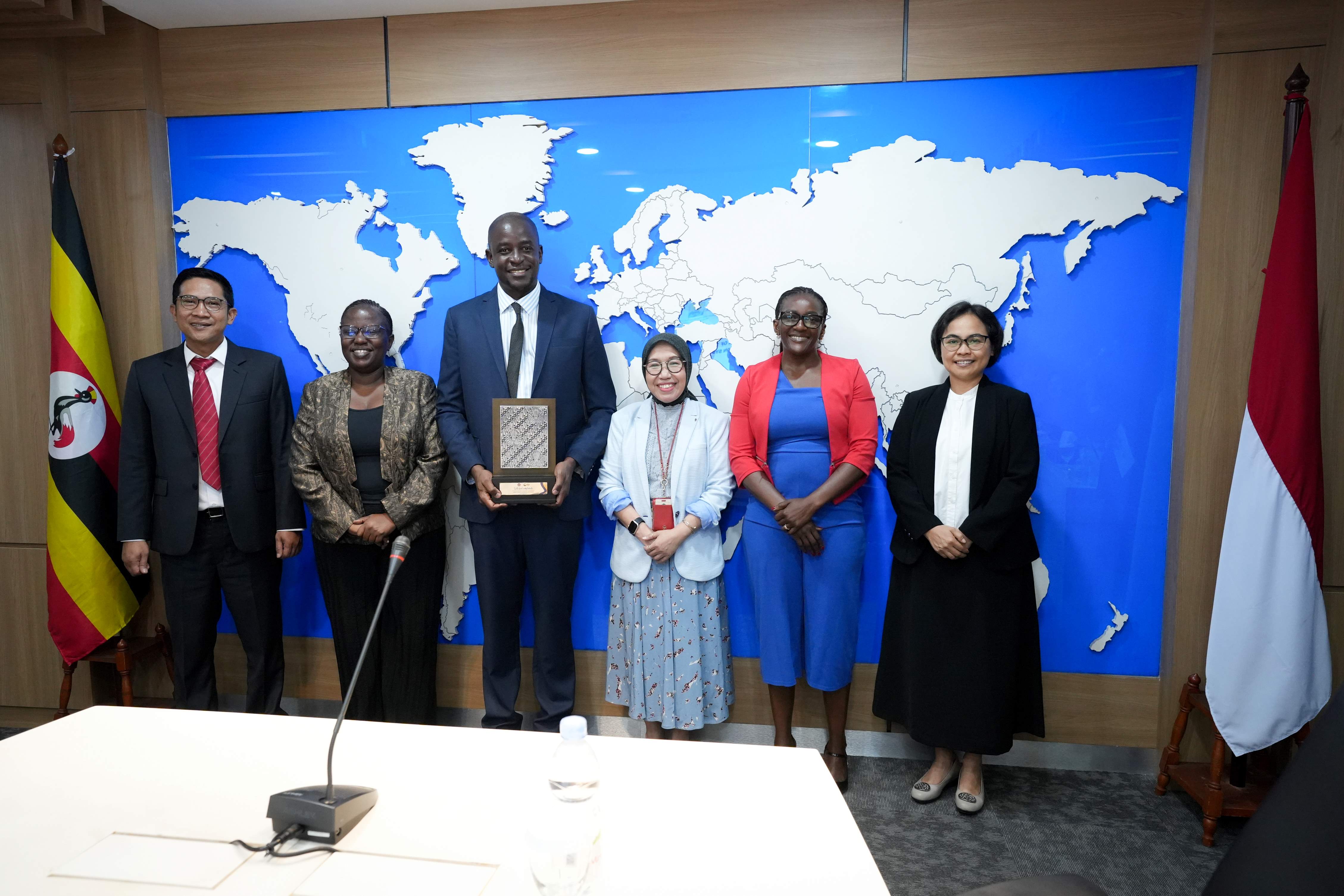
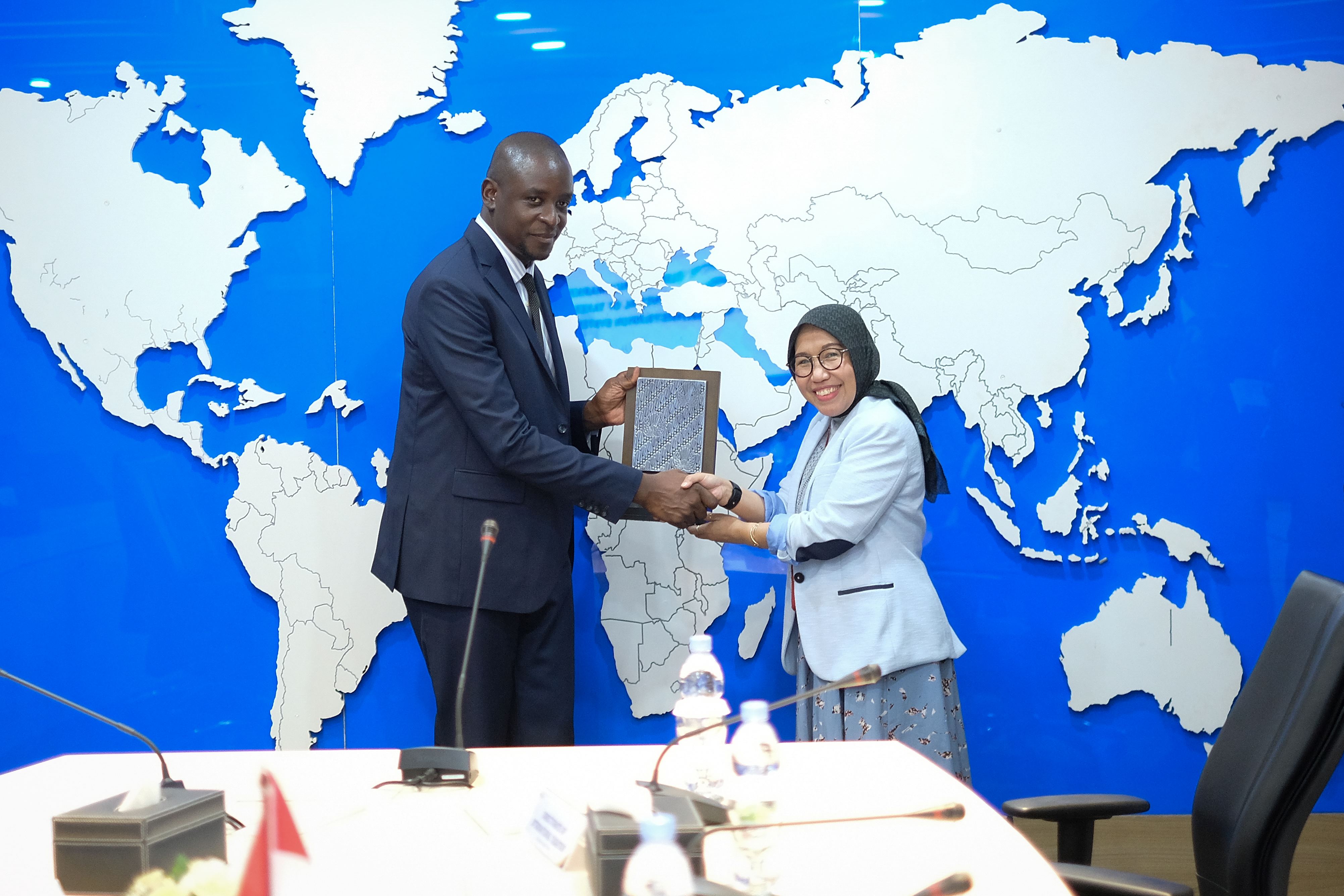
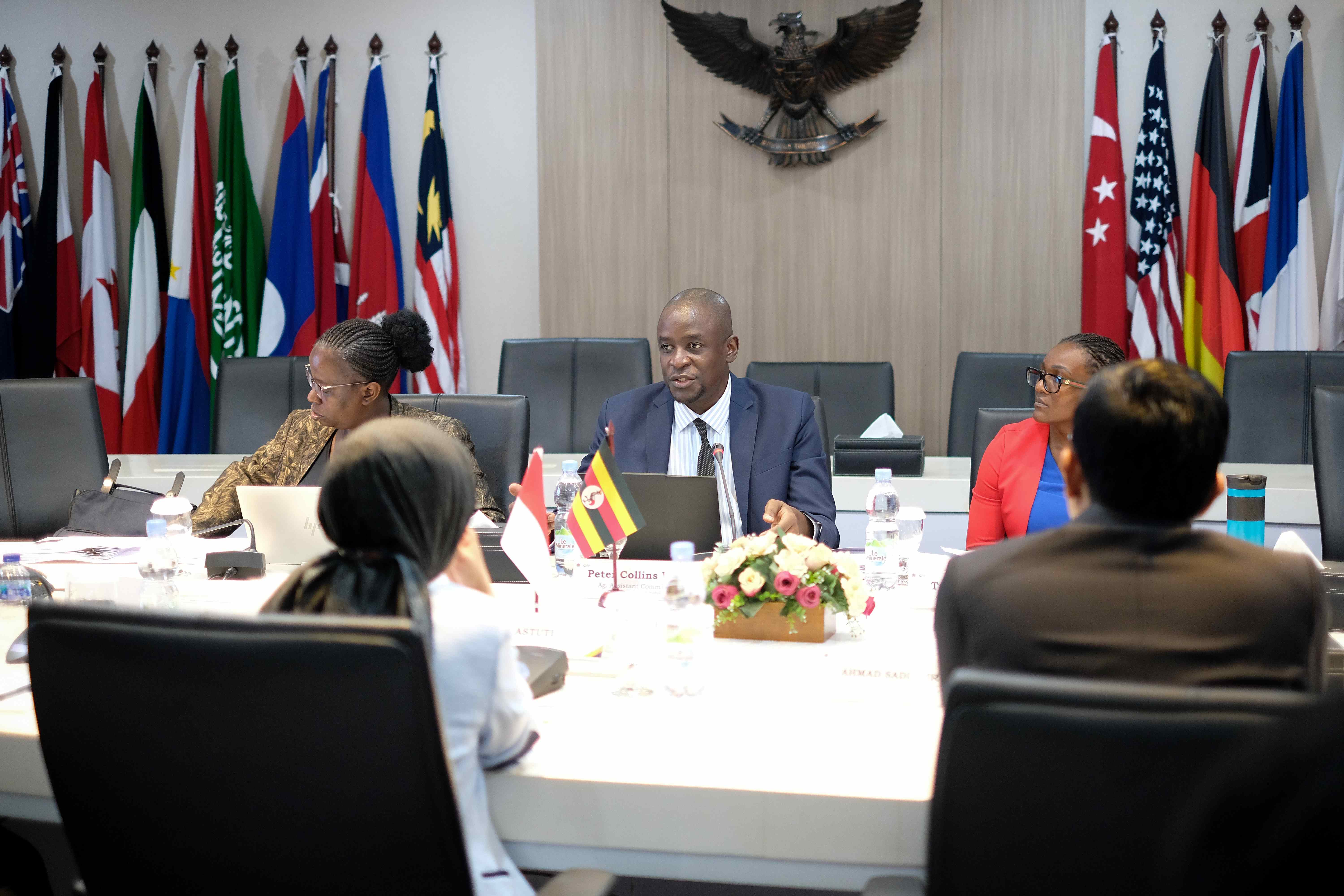
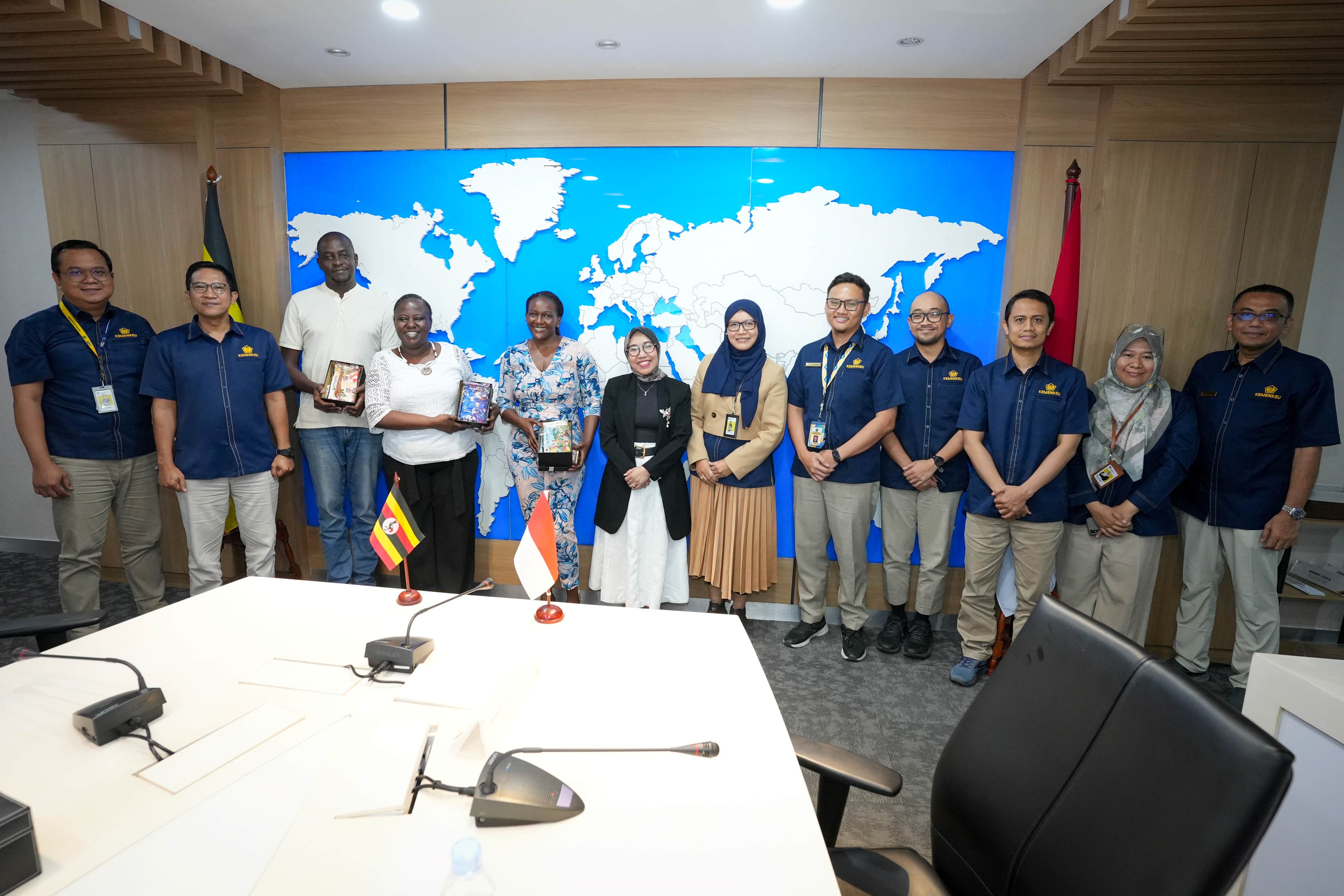
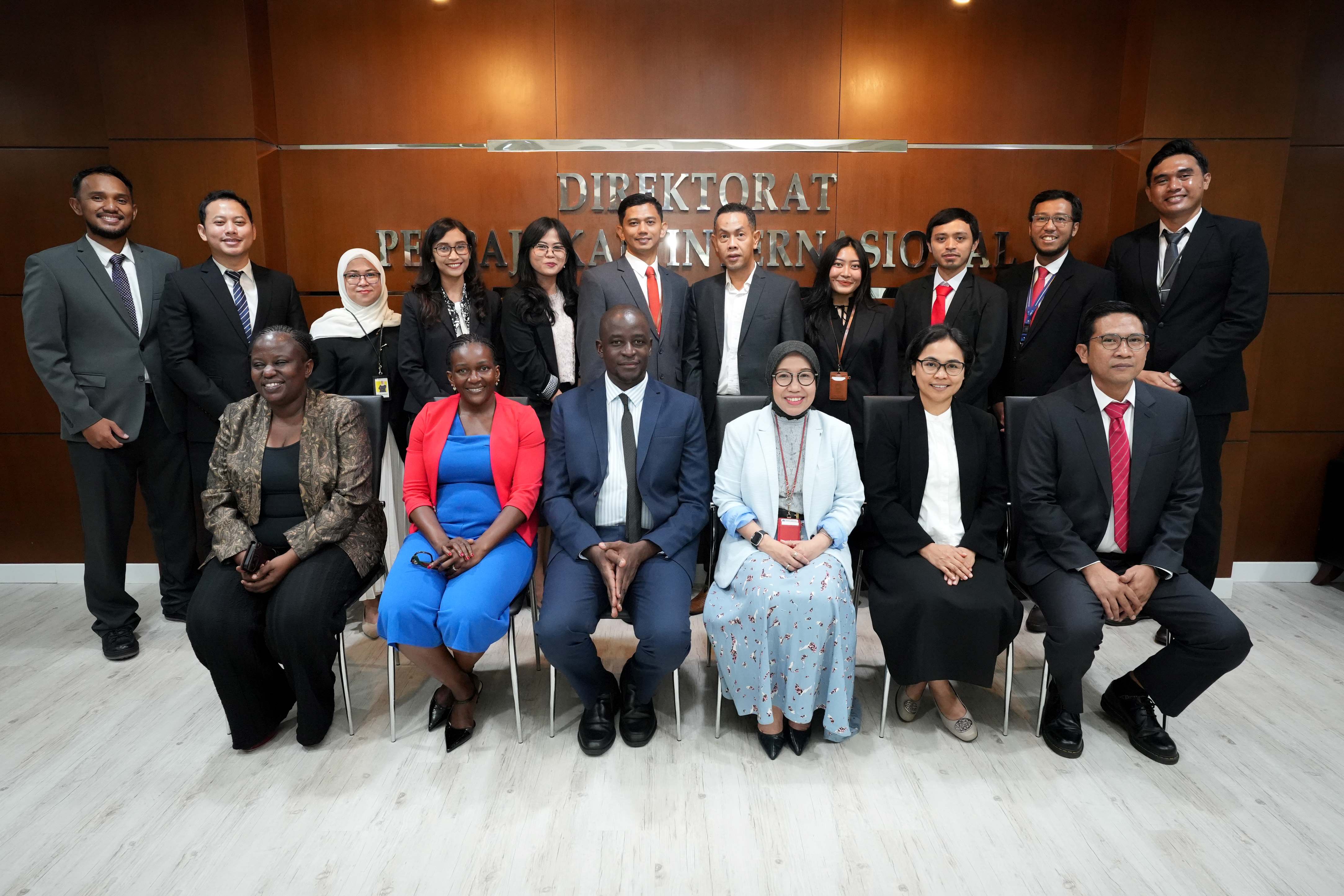
Being successful in launching a masterpiece in integrating tax system in the early 2026, Indonesia is remarked as one of global benchmark for Uganda Revenue Authority (URA). Taking place in the Head Office of Directorate General of Taxes (DGT) in South Jakarta, URA conducted a study visit and benchmark to DGT for three days (Monday–Wednesday, 20/4–22/4).
The study visit and benchmark were intended to learn the operational framework of tax administration, architecture of tax system, and best practices on tax administration digitalization in Indonesia. URA also looked forward to the experience sharing from DGT in managing the tax revenue from oil, gas, and mining sector.
Acting Assistance Commissioner of Information Technology Representative, Peter Collins Wasenda, Acting Assistance Commissioner of User Department Representative and Subject Matter Expert, Tracy Judith Akello, and External Subject Matter Expert in Documenting User and System Requirements, Rosemary Kisembo Basmera represented URA as the delegation.
The Director of International Taxation, Dwi Astuti, The Head of Subdirectorate of International Taxation Agreement and Cooperation, Ahmad Sadiq Urwah F. M., and The Head of Oil and Gas Tax Office, Merry Lidya and other DGT team welcomed the URA delegation with warm greetings.
“On behalf of Director General of Taxes, we would like to convey our gratitude to URA for trusting us and showing a strong commitment to learn and share our tax administration system. It is such an honor for us to have a valuable opportunity to strengthen our cooperation and mutual learning,” said Dwi in the opening remarks.
It was the second visit of URA to DGT after the previous one in May 2022 in understanding the oil and gas taxation. The current visit was then broadened to benchmark Indonesia’s tax reform.
URA is now expecting to modernize their tax administration by utilizing the information technology (IT), data analytics, and artificial intelligence. By benchmarking the DGT’s transformation in developing Coretax system, the discussion was focused not only on taxation aspects but also other aspects. The nine-session discussion brought system capability, IT infrastructure, business processes, organization, and human resources to the table.
The three-day agenda was then closed by Dwi and Rosemary with closing remarks on behalf of DGT and URA.
“As we aware that nowadays, as the consequences of the digitalization, every tax administration should also develop their own capacity and capability not only the organization but also the human resources to develop their organization,” told Dwi.
Dwi also acknowledged that Indonesia relied so much on tax revenue that Indonesia keeps going on to develop more in terms of organization, IT system and database, regulation, human resources, and business process as the area of development.
“I do really hope that this three-day agenda will fulfill your needs and then can give insight or reference and better understanding for your unit and it will be useful for you to develop further your organization,” hoped Dwi.
Rosemary then conveyed the gratitude to DGT for the experience sharing and wishes for Indonesia.
“We are really really really grateful for the experience you share with us … We wish you an exciting journey to improving quality, consistency. And wish our interaction to strengthen ability support and decision quality … Long live Indonesia for the experience,” closed Rosemary.
| Reporter: Destiny Wulandari |
| Photographer: Istya Panca Subrata |
| Editor: Yacob Yahya, co-reviewed by Directorate of International Taxation |
*)Konten yang terdapat pada halaman ini dapat disalin dan digunakan kembali untuk keperluan nonkomersial. Namun, kami berharap pengguna untuk mencantumkan sumber dari konten yang digunakan dengan cara menautkan kembali ke halaman asli. Semoga membantu.
- 237 views