We Are the Directorate General of Taxes

Present as the frontline in managing state revenue from the taxation sector, committed to providing transparent, accountable, and digital-based services. We play a role in collecting taxes to support national development and improve the welfare of the Indonesian people, while also becoming a trusted partner for taxpayers in fulfilling their tax obligations easily, quickly, and safely.

Overview

The Directorate General of Taxes is a first echelon unit under the Ministry of Finance tasked with formulating and implementing policies and technical standardization in the field of taxation

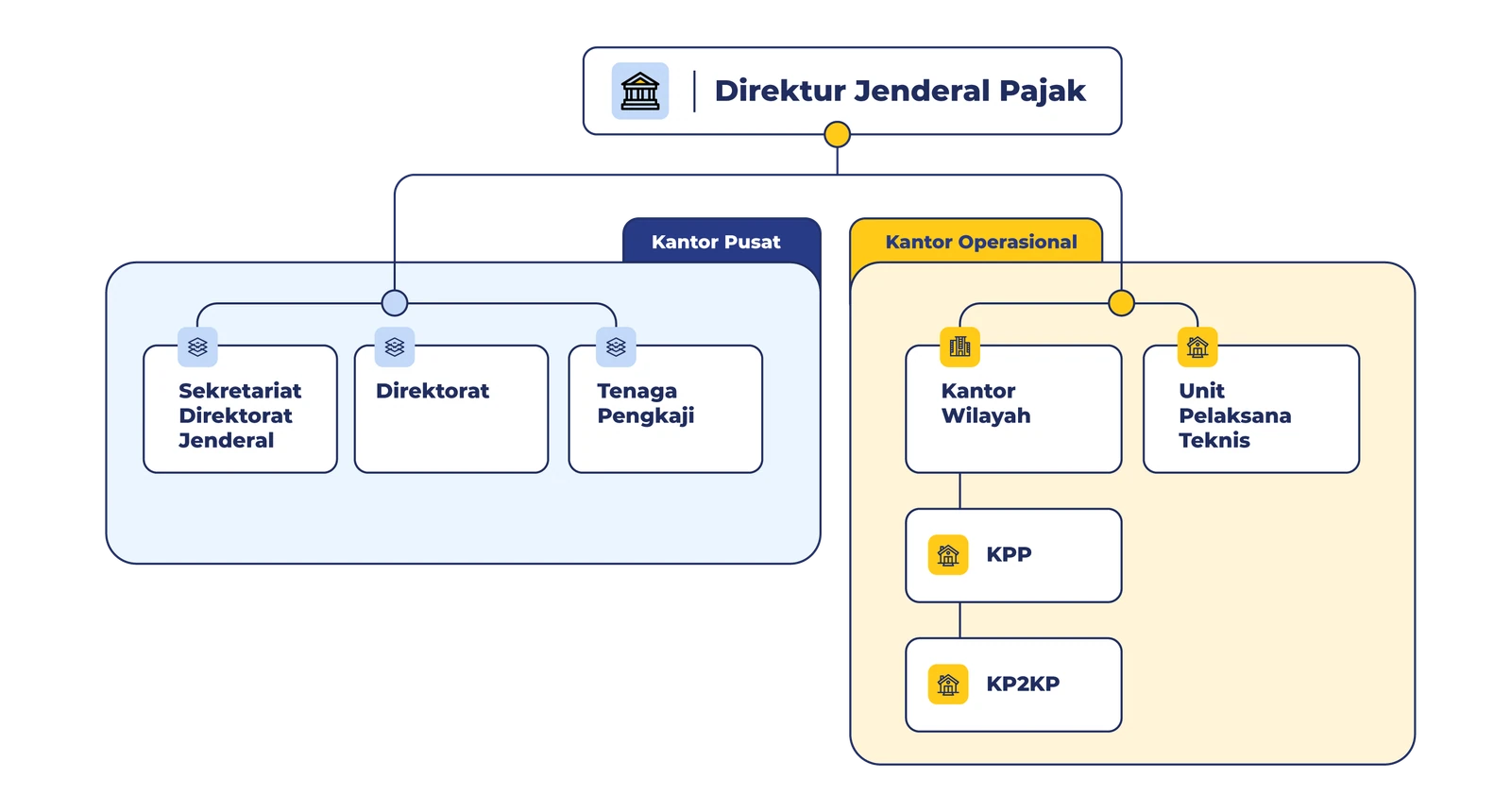
Organizational Structure of the Directorate General of Taxes

Vision

“To become the driver of national development through the best tax administration grounded in integrity in order to realize the Vision of the Ministry of Finance”

Mission

  1. Achieving maximum tax compliance and revenue.

  2. Achieving regulations that are responsive to economic dynamics.

  3. Achieving reliable management of organizational resources and information technology.

Objectives

To realize its vision and mission, the Directorate General of Taxes aligns with the objectives of the Ministry of Finance by setting the following objectives of the Directorate General of Taxes for the 2025 - 2029 period:

  1. Maximum tax compliance and revenue. The achievement of this objective is measured by the tax revenue realization percentage indicator.

  2. Regulations responsive to economic dynamics. The achievement of this objective is measured by the legal reform performance index indicator.

  3. Reliable management of organizational resources and information technology. The achievement of this objective is measured by the service user satisfaction index indicator.

Vision

Ministry of Finance Organization

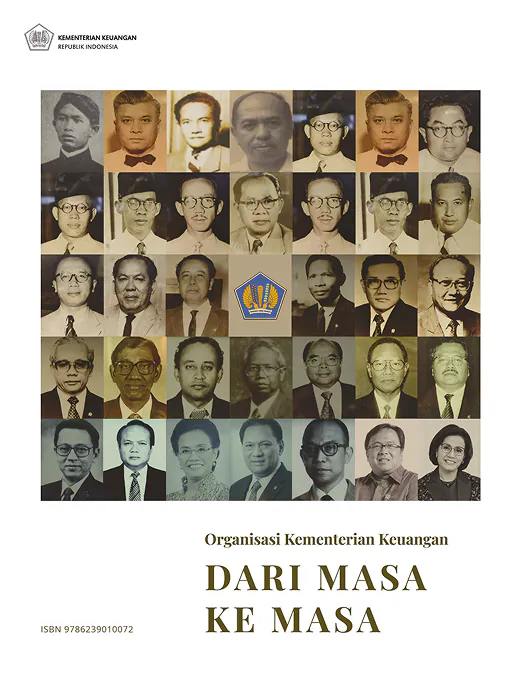
The Ministry of Finance is a ministry with a large and diverse organization, and the only one shaped like a holding company. Since the beginning of Indonesian independence, its organizational structure has continued to change following the times and the needs of stakeholders, as recorded in various Minister of Finance decisions and regulations to this day.

DGT History

Organizational Structure

In brief, the organizational structure of the Directorate General of Taxes can be divided into the head office and operational offices. The head office carries out policy formulation and technical standardization, analysis and development, as well as coaching and administrative support functions. The operational offices carry out operational technical and/or technical support functions.

  • 14

    Directorate Units

  • 04

    Senior Advisor Positions

  • 34

    Regional Offices

  • 04

    Large Taxpayer Tax Offices

  • 09

    Special Tax Offices

  • 38

    Medium Tax Offices

  • 301

    Primary Tax Offices

  • 204

    Tax Counseling and Consultation Service Offices

  • 04

    Technical Implementing Units

Duties & Functions

The Directorate General of Taxes is tasked with formulating and implementing policies in the field of taxation in accordance with applicable regulations, with the main functions covering guidance and counseling, implementation and supervision of taxation, setting standards and procedures, providing technical guidance, as well as monitoring, evaluation, and tax administration under the Ministry of Finance.

Duties of Units and Positions at the DGT Head Office
NoUnitDuties
1Sekretariat Direktorat JenderalCarrying out coordination of task implementation as well as guidance and administrative support to all units in the DGT.
2Direktorat Peraturan Perpajakan IFormulating and implementing policies and technical standardization in the field of regulations concerning general provisions and tax procedures, tax collection by forced letter (distress warrant), Value Added Tax and Value Added Tax on Sales of Luxury Goods, and Other Indirect Taxes, as well as Land and Building Tax.
3Direktorat Peraturan Perpajakan IIFormulating and implementing policies and technical standardization in the field of regulations concerning income tax, advocacy, provision and implementation of advocacy guidance, and harmonization of tax regulations.
4Direktorat Pemeriksaan & PenagihanFormulating and implementing policies and technical standardization in the field of tax examination and collection.
5Direktorat Pengawasan PerpajakanFormulating and implementing policies and technical standardization in the field of tax supervision.
6Direktorat Keberatan & BandingFormulating and implementing policies and technical standardization in the field of objections and appeals.
7Direktorat Potensi, Kepatuhan & PenerimaanFormulating and implementing policies and technical standardization in the field of potential, compliance, and revenue.
8Direktorat Penyuluhan, Pelayanan & Hubungan MasyarakatFormulating and implementing policies and technical standardization in the field of tax education, services, and public relations.
9Direktorat Data dan Informasi PerpajakanFormulating and implementing policies and technical standardization in the field of tax data and information.
10Direktorat Kepatuhan Internal & Transformasi Sumber Daya AparaturFormulating and implementing policies and technical standardization in the field of internal compliance and apparatus resource transformation.
11Direktorat Teknologi Informasi dan KomunikasiFormulating and implementing policies and technical standardization in the field of information and communication technology.
12Direktorat Transformasi Proses BisnisFormulating and implementing policies and technical standardization in the field of business process transformation.
13Direktorat Perpajakan InternasionalFormulating and implementing policies and technical standardization in the field of international taxation.
14Direktorat Penegakan HukumFormulating and implementing policies and technical standardization in the field of tax law enforcement.
15Tenaga Pengkaji Bidang Ekstensifikasi & Intensifikasi PajakStudying and reviewing issues in the field of tax extensification and intensification, and providing conceptual problem-solving reasoning based on expertise.
16Tenaga Pengkaji Bidang Pengawasan & Penegakan Hukum PerpajakanStudying and reviewing issues in the field of tax supervision and law enforcement, and providing conceptual problem-solving reasoning based on expertise.
17Tenaga Pengkaji Bidang Pembinaan & Penertiban Sumber Daya ManusiaStudying and reviewing issues in the field of human resource development and discipline, and providing conceptual problem-solving reasoning based on expertise.
18Tenaga Pengkaji Bidang Pelayanan PerpajakanStudying and reviewing issues in the field of tax services, and providing conceptual problem-solving reasoning based on expertise.
Duties of Regional Office Units
NoUnitDuties
1Kanwil DJP Wajib Pajak Besar dan Kanwil DJP Jakarta Khusus yang berlokasi di JakartaCarrying out coordination, guidance, control, analysis, and evaluation of the implementation of Tax Office (KPP) tasks, as well as the elaboration of policies from the head office.
2Kanwil DJP selain Kanwil DJP Wajib Pajak Besar dan Kanwil DJP Jakarta Khusus yang lokasinya tersebar di seluruh wilayah IndonesiaRegional Offices of DGT other than those for Large Taxpayers and the Special Regional Office of DGT Jakarta, whose locations are spread throughout Indonesia.
Duties of Tax Office Units & Tax Service Offices
NoUnitDuties
1KPP Wajib Pajak BesarProviding education, services, and supervision to taxpayers. This unit can be distinguished by the segment of taxpayers it administers, specifically administering national large taxpayers.
2KPP MadyaProviding education, services, and supervision to taxpayers. This unit can be distinguished by the segment of taxpayers it administers, specifically administering regional large taxpayers and special large taxpayers, which include foreign entities and individuals, foreign investment companies, and listed companies.
3KPP PratamaProviding education, services, and supervision to taxpayers. This unit can be distinguished by the segment of taxpayers it administers, specifically handling taxpayers within its working area.
4KP2KPTo reach people living in remote areas not covered by a KPP, tax services, education, and consultation are carried out.
Duties of Technical Implementing Units
NoUnitDuties
1PPDDPCenter for Processing Tax Data and Documents
2KPDDPThe Office for Processing Tax Data and Documents has the task of carrying out the receipt, scanning, recording, and storage of tax documents by utilizing tax information technology.
3KLIPProviding tax information services, handling complaints, and issuing advisories to taxpayers by utilizing information and communication technology, operating under and reporting directly to the Director General of Taxes.